

Table of Contents
- Understanding Your Liver and Why Diet Matters
- Step 1: Assess Your Current Eating Habits and Set Goals
- Step 2: Build Your Fatty Liver Diet Plan
- Step 3: Foods and Drinks to Avoid With Fatty Liver
- Step 4: Adopt a Mediterranean Diet for Fatty Liver
- Step 5: Create a Sample Day and Shopping List
- Step 6: How Long Does It Take to Improve Fatty Liver With Diet
- Step 7: Track Progress and Support Your Liver With Supplements
- Frequently Asked Questions
Last Updated: October 16, 2026
Understanding Your Liver and Why Diet Matters
Your liver filters blood, breaks down toxins, and helps digest food. When too much fat builds up in liver cells, it's called fatty liver disease.
A liver friendly diet is your most powerful tool, you can't out-supplement a bad diet.
A quality supplement with natural ingredients like Turmeric and Milk Thistle can support your body's natural detoxification while you make dietary changes.

Step 1: Assess Your Current Eating Habits and Set Goals
Write down everything you eat and drink for three days. Don't change anything yet, just observe.
Look for patterns: sugary beverages, frequent red meat, skipped vegetables. This baseline shows where to focus first.
Set one clear goal. Not five. One. Examples:
- Swap soda for water
- Add vegetables to lunch
- Eat fish twice a week
One change sticks better than an overhaul.
Step 2: Build Your Fatty Liver Diet Plan
Focus on whole and minimally processed foods
Whole foods have one ingredient, chicken, rice, broccoli, and your liver processes them easily.
Minimally processed foods have a short ingredient list: oatmeal, no-salt-added canned beans, frozen vegetables.
Processed foods have long ingredient lists that force your liver to work harder. Skip them when you can.
Start simple: replace one processed food per week with a whole food version.
Prioritize vegetables, fruit, and fiber
Vegetables should fill half your plate at lunch and dinner.
Nonstarchy vegetables are best for fatty liver. These don't spike blood sugar.
Fruit is fine in moderation. Berries are excellent. Limit high-sugar fruits like mangoes and dried fruit.
Fiber slows digestion and helps your body process fat better. Get it from vegetables, whole grains, beans, lentils, nuts, and seeds.
Choose lean proteins and fish
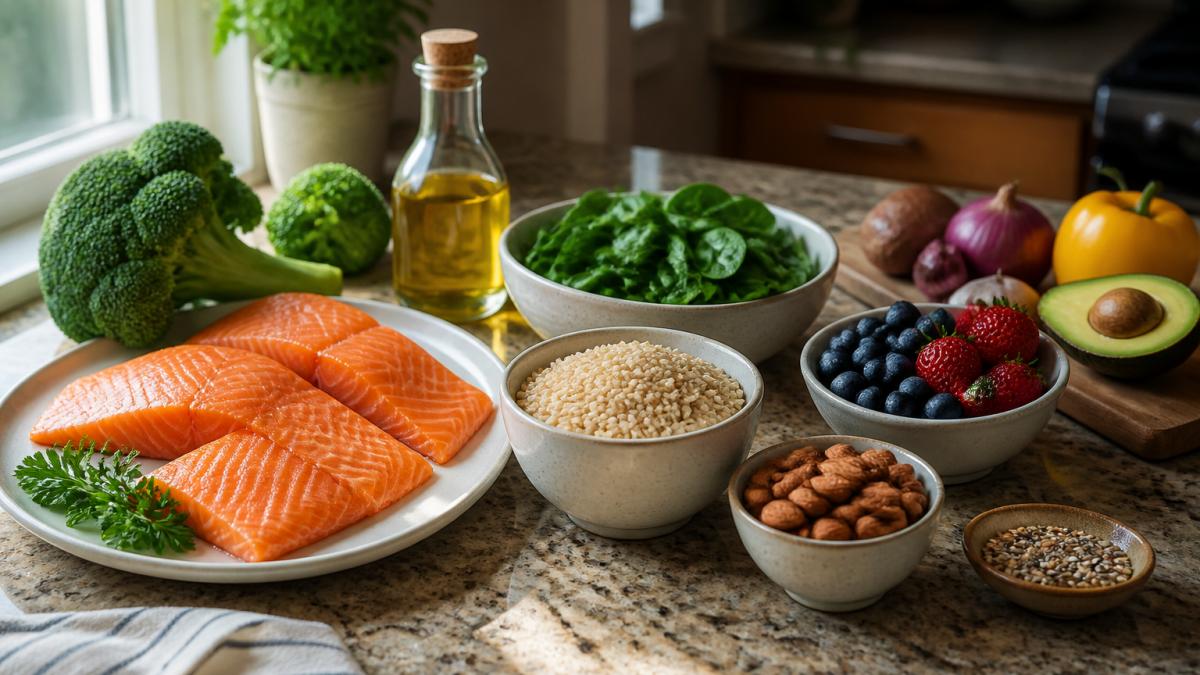
Lean protein supports your body without excess fat. Choose chicken breast, turkey, baked or broiled fish, eggs, Greek yogurt, and legumes. Fish is particularly helpful, its omega-3 fatty acids reduce inflammation in your liver. Aim for fish twice a week. A serving is about the size of your palm.
Include healthy fats and unsaturated fats
Your liver needs fat, and unsaturated fats are the good ones: olive oil, avocados, nuts, seeds, and fatty fish like salmon.
Limit saturated fats (butter, fatty cuts of meat) and avoid trans fats (fried foods, some baked goods).
Use olive oil for cooking and salads. One tablespoon per meal is enough.
Step 3: Foods and Drinks to Avoid With Fatty Liver
Limit red and processed meat
Red meat is high in saturated fat, forcing your liver to work harder. Processed meat like bacon, sausage, and deli meat is worse, with added sodium and chemicals.
Eat red meat no more than once a week if at all. Replace it with fish or chicken most days.
Reduce added sugar and sugary drinks
Added sugar drives fat storage in liver cells. Cut or drastically reduce soda, energy drinks, juice, sweetened tea, desserts, candy, sugary cereals, flavored yogurt, and sweet baked goods.
Drink water instead. Unsweetened tea is fine too. This single change often produces noticeable results within weeks.
Manage alcohol intake
Alcohol is processed by your liver, and even small amounts add stress when it's already struggling. If you drink, limit it to one per day for women and two for men. If you have fatty liver, consider stopping entirely while you rebuild liver health.
Step 4: Adopt a Mediterranean Diet for Fatty Liver
The Mediterranean diet is one of the best-studied approaches for liver health: olive oil as the main fat, fish and lean poultry instead of red meat, whole grains, vegetables, fruit, legumes, nuts, and limited dairy.
It reduces inflammation and supports weight loss, both of which help reverse fatty liver. Start with one Mediterranean meal per week, even partial adoption helps.
Step 5: Create a Sample Day and Shopping List
A complete sample day of meals (with portions)
Portions below are a starting template for an average adult, not a prescription.
Morning snack (~200 calories): 1 medium apple with 1 tablespoon almond butter.
Afternoon snack (~200 calories): 1/4 cup walnuts (about a small handful) and 1 small orange.
Optional evening snack (~150 calories): 1/2 cup plain Greek yogurt with a few raspberries.
That lands around 1,900 to 2,000 calories, with 25 to 30 grams of fiber, no added sugar, and no processed meats.
Budget-friendly swaps and meal prep
Eating this way doesn't require specialty stores. A few swaps cut the weekly bill without cutting nutrition:
- Frozen vegetables instead of fresh. A 12 oz bag of frozen broccoli runs $1.50 to $2.50 and holds up for months; frozen spinach, green beans, and stir-fry blends work the same way and are frozen at peak ripeness.
- Canned or dried beans instead of fresh-cooked. A 15 oz can of no-salt-added black beans usually costs under $1.50. Rinse them for 30 seconds to knock down added sodium by roughly a third.
- Chicken thighs instead of breast. Often $1 to $2 less per pound. Trim visible fat and remove the skin.
Sunday prep in about 90 minutes:
- Cook 3 cups dry brown rice (yields about 9 cups cooked). Cool, portion into five containers.
- Roast two sheet pans of vegetables, broccoli, sweet potato cubes, and bell peppers, at 425°F for 20 to 25 minutes with 2 tablespoons olive oil total.
- Bake or pan-sear 4 to 5 chicken breasts and 4 salmon portions. Refrigerate what you will eat within three days; freeze the rest.
- Rinse and drain two cans of beans. Store in a covered container.
- Wash and dry salad greens; keep them in a bowl lined with a paper towel so they last the week.
That prep covers lunches and dinners Monday through Friday with minimal weeknight cooking.
One-week shopping list
Produce
- Spinach or mixed greens (2 bags or bunches)
- Broccoli (1 lb fresh or 2 frozen bags)
- Carrots (1 lb)
Protein
- Chicken breast or thighs (2 lb)
- Salmon or other fish fillets (1 lb)
- Eggs (1 dozen)
Grains and pantry
- Old-fashioned oats (1 canister)
- Brown rice (2 lb bag)
- Whole grain bread or whole wheat tortillas
Skip this week: soda, juice, sweetened coffee drinks, deli meat, bacon, sausage, white bread, sugary cereal, flavored yogurt, and packaged pastries.
Step 6: How Long Does It Take to Improve Fatty Liver With Diet
Most people see changes in 8 to 12 weeks, depending on how strictly you follow the plan and how much weight you need to lose. Weight loss is the key driver, losing even 5 to 10 percent of body weight significantly improves fatty liver, and your doctor can order a liver ultrasound to track progress. Stay consistent.
Step 7: Track Progress and Support Your Liver With Supplements
Track what matters, and what doesn't
A daily log spots patterns but is not a measure of liver health. Keep it simple: what you ate and drank (one line per meal), how you felt (energy, digestion, bloating), and your weight once weekly, same day, time, and scale.
A log can't tell you how much fat is in your liver, whether inflammation is dropping, or whether liver enzymes are normalizing, those require clinical testing. Don't treat feeling better or losing a few pounds as proof your liver has improved.
How liver health is actually assessed
Your clinician, not a symptom tracker, evaluates liver health. Common tools include:
- Blood tests such as a comprehensive metabolic panel and liver enzyme tests (ALT, AST, and others). These are widely available and inexpensive, often covered by insurance as routine labs.
- Imaging such as an abdominal ultrasound, which can show fat accumulation. More specialized imaging and non-invasive fibrosis scores can estimate scarring when needed.
- Fibrosis assessment for people with ongoing risk factors, since scarring, not fat alone, drives long-term outcomes.
Ask your clinician what baseline tests make sense for you and how often to repeat them. A typical pattern is a follow-up visit and repeat labs every 6 to 12 months for someone making lifestyle changes, but the right interval depends on your diagnosis, other conditions, and medications.
When to seek care
Contact your clinician promptly if you notice:
- Yellowing of the skin or eyes (jaundice)
- Swelling in the abdomen, legs, or ankles
- Easy bruising or bleeding that is new for you
Also check in if you have completed 12 weeks of consistent dietary changes and see no movement on weight, labs, or how you feel. That is a signal to reassess with a professional, not to double down alone.
Personalization by diagnosis and stage
Liver-friendly eating is not one plan. The right approach depends on your specific condition:
- MASLD (metabolic dysfunction-associated steatotic liver disease), formerly called NAFLD. The focus is weight loss of 5 to 10 percent of body weight, reducing added sugar and refined carbohydrates, and improving insulin sensitivity. The plan in this article fits well here.
- MASH (metabolic dysfunction-associated steatohepatitis), formerly NASH. Same foundation, but with closer medical monitoring because inflammation and possible scarring are present.
- Cirrhosis. Protein needs often go up, not down, and sodium restriction becomes important if fluid retention is an issue. Very low-carb or aggressive weight-loss plans can be risky. This is a dietitian-and-hepatologist conversation, not a self-directed one.
If you are pregnant, managing diabetes or kidney disease, or taking medications that affect blood sugar or fluid balance, get individualized guidance before making major changes.
The truth about "liver detox" and supplements
No food, juice, tea, or cleanse "detoxes" your liver, it detoxifies your body on its own. What you can do is stop overloading it: cut alcohol, added sugar, and excess saturated fat, and eat enough fiber, protein, and unsaturated fat.
Supplements deserve caution, not enthusiasm:
- Herbal and botanical products are not required to prove effectiveness before they are sold, and quality varies widely.
- Some popular "liver" ingredients can interact with prescription medications or, in rare cases, cause liver injury themselves. Green tea extract in high-dose supplement form and certain herbal blends are examples that have drawn clinical attention.
- Tell your clinician and pharmacist about every supplement you take, including turmeric, milk thistle, and anything marketed for liver support.
If you and your care team decide a supplement is appropriate, choose one from a manufacturer that publishes a certificate of analysis, lists every ingredient with amounts, and follows current good manufacturing practices.
Frequently Asked Questions
Can a liver-friendly diet actually reverse fatty liver disease?
Diet changes can significantly reduce liver fat and improve liver function, especially in early stages of fatty liver disease. Studies show that weight loss of 5-10% through dietary changes can reduce liver fat by up to 30%. However, reversal depends on consistency, disease stage, and individual factors. Work with your doctor to monitor progress through blood tests and imaging. A liver-friendly diet works best when combined with physical activity and, if needed, targeted supplements like Renew Liver Booster to support your liver's natural detoxification processes.
How long does it take to improve fatty liver with diet changes?
Most people notice measurable improvements within 8-12 weeks of consistent dietary changes, though liver function tests may show improvements sooner. Significant fat reduction typically occurs over 3-6 months. The timeline depends on how strictly you follow the plan, your starting weight, and disease severity. Patience is essential, sustainable changes work better than dramatic restrictions. Pairing dietary improvements with a science-backed supplement like Renew Liver Booster, which contains Milk Thistle and Turmeric to support liver regeneration, can help optimize your results.
What's the difference between a Mediterranean diet and a general liver-friendly diet?
A Mediterranean diet emphasizes olive oil, fish, vegetables, and whole grains, all excellent for liver health. It's one of the best-researched patterns for fatty liver support because it reduces inflammation and provides healthy unsaturated fats. A general liver-friendly diet is broader and includes any approach that limits processed foods, added sugar, and alcohol while emphasizing whole foods and lean proteins. The Mediterranean approach is a proven, structured version that many people find easier to follow long-term.
Is it safe to take liver supplements while following a fatty liver diet?
Yes, when chosen carefully. Supplements like Renew Liver Booster, made in the USA with natural ingredients like Turmeric, Milk Thistle, and Beet Root, are designed to complement dietary changes. These ingredients support your liver's natural detoxification and regeneration. However, always consult your doctor before starting any supplement, especially if you take medications, as some ingredients can interact. A supplement works best alongside, not instead of, a liver-friendly diet and lifestyle changes.