

Table of Contents
- What You Need to Know Before Starting
- Step 1: Understand Your Liver's Role in Metabolism
- Step 2: Foods to Avoid for Fatty Liver
- Step 3: Build a Liver-Supportive Diet
- Step 4: Best Exercise for Liver Health
- Step 5: How Long to Reverse Fatty Liver
- Step 6: Sleep, Stress, and Detoxification Pathways
- Step 7: Supplement Support and Cholesterol Management
- Frequently Asked Questions
Last Updated: September 27, 2026
What You Need to Know Before Starting
Metabolic liver disease affects roughly one in four adults. It develops when excess fat accumulates in liver cells, disrupting glucose and lipid processing. Unlike alcoholic liver disease, this happens without significant alcohol consumption, it's called metabolic-associated fatty liver disease (MASLD).
The good news: you can improve metabolic liver health through deliberate lifestyle changes. Diet, exercise, sleep, and targeted supplementation work together to reduce hepatic steatosis and restore normal liver function. This guide from Renew Liver Booster breaks down seven concrete steps based on what research shows works.
Step 1: Understand Your Liver's Role in Metabolism
Your liver is your body's metabolic command center. It regulates glucose production, manages cholesterol synthesis, processes dietary fats, and filters toxins. When liver cells become overwhelmed with triglycerides, this machinery slows down. Insulin resistance develops, blood sugar regulation falters, and your body struggles to break down excess fat.
MASLD develops gradually as visceral fat accumulates around your organs, triggering chronic inflammation. Your hepatocytes become filled with lipid droplets, reducing their ability to perform detoxification and regeneration. The inflammatory cascade involves oxidative stress, where free radicals damage cell membranes faster than your body can repair them.
Step 2: Foods to Avoid for Fatty Liver
Refined carbohydrates and saturated fats accelerate hepatic steatosis. When you consume high-glycemic foods, white bread, sugary drinks, processed snacks, your blood glucose spikes sharply. Your pancreas releases insulin, but if your cells are insulin-resistant, that glucose gets redirected toward fat synthesis instead of energy use.
Why refined carbohydrates and saturated fats accelerate steatosis
Refined carbohydrates bypass your digestive system's natural satiety mechanisms and hit your bloodstream fast, triggering rapid insulin release. Your liver then converts excess glucose into triglycerides through de novo lipogenesis, your liver manufactures fat from carbohydrates. Over time, this overwhelms your liver's capacity to export triglycerides, so they accumulate as lipid droplets inside hepatocytes.
Saturated fats promote hepatic lipogenesis directly and increase oxidative stress within liver cells.
Practical substitutions that support lipid metabolism
Replace white bread and pasta with whole grains that have a lower glycemic index. Swap sugary beverages for water, herbal tea, or black coffee. Choose lean proteins over fatty cuts. When you consume fat, prioritize unsaturated sources: olive oil, avocado, nuts, and fatty fish rich in omega-3 fatty acids.
Step 3: Build a Liver-Supportive Diet
A liver-supportive diet emphasizes whole foods that reduce oxidative stress and support detoxification pathways.
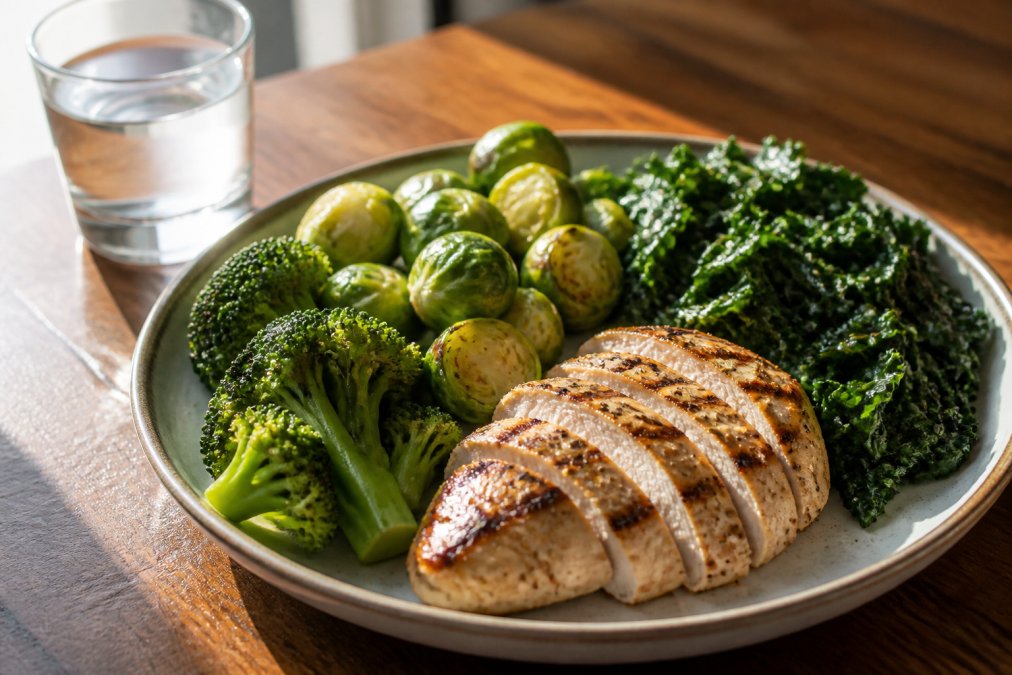
Cruciferous vegetables and antioxidants
Cruciferous vegetables, broccoli, Brussels sprouts, cabbage, kale, contain compounds that activate your liver's Phase 2 detoxification enzymes. These enzymes neutralize oxidative stress and prepare toxins for elimination. Antioxidants from colorful vegetables and fruits reduce oxidative stress at the cellular level. Beets contain betalains supporting liver cell regeneration.
Lean protein and fiber for glucose regulation
Lean protein slows gastric emptying, reducing the rate glucose enters your bloodstream and preventing insulin spikes that trigger hepatic lipogenesis. Aim for 25-35 grams of protein per meal from chicken, fish, legumes, and Greek yogurt.
Step 4: Best Exercise for Liver Health
Exercise improves metabolic liver health through multiple pathways: it reduces visceral fat, improves insulin sensitivity, and increases hepatic fat oxidation. Combine aerobic and resistance training.
Aerobic exercise and visceral fat reduction
Aerobic exercise is particularly effective at reducing visceral fat. Thirty minutes of moderate-intensity aerobic activity most days produces measurable reductions in liver fat within 8-12 weeks, even without significant weight loss. Walking, cycling, swimming, and jogging all work. Moderate intensity means you can talk but not sing, roughly 50-70% of your maximum heart rate.
Resistance training for metabolic health
Resistance training improves insulin sensitivity and increases lean muscle mass, which is metabolically active tissue. Three sessions per week of compound movements, squats, deadlifts, rows, chest presses, build functional strength while improving metabolic health.
Step 5: How Long to Reverse Fatty Liver
Timeline depends on severity, adherence, and baseline metabolic health.
Week 1-4: Initial metabolic shifts
Within 2-4 weeks of consistent dietary changes and exercise, your body mobilizes stored hepatic fat for energy. Blood work often shows early improvements: ALT and AST liver enzymes typically drop 10-15%, triglycerides decline, and fasting glucose stabilizes. Weight loss of 2-4 pounds per week is common as visceral fat mobilizes first.
Week 4-8: Visible hepatic steatosis reduction
By weeks 4-8, ultrasound imaging typically shows measurable reduction in liver fat content. Liver enzyme profiles continue improving, often reaching near-normal ranges. Research shows that even 5% weight loss produces measurable improvements in liver fat content. At 10% weight loss, most people see significant steatosis reversal on imaging.
Week 8-12: Metabolic stabilization
By 8-12 weeks, the inflammatory cascade driving MASLD begins reversing. Markers of oxidative stress decline, and your liver's regenerative capacity accelerates. Imaging typically shows mild steatosis resolved to normal or near-normal liver appearance. Cholesterol panels improve, with LDL declining and HDL increasing.
Month 4-6: Cellular regeneration and reversal
Mild to moderate MASLD often resolves completely within 3-6 months of sustained lifestyle intervention. Hepatocytes regenerate, lipid droplet accumulation clears, and liver function tests normalize. Metabolic markers stabilize at healthy ranges.
Month 6-12: Advanced steatosis reversal
Moderate to severe MASLD typically requires 6-12 months of consistent intervention. Imaging at 6 months often shows substantial improvement even in severe cases. The key factor is consistency. People maintaining 80%+ adherence see continued improvement; those who relapse typically stagnate or regress.
Factors that accelerate improvement
Weight loss remains the single strongest predictor of improvement speed. Every 1% reduction in body weight correlates with approximately 0.5% reduction in liver fat content. Combined aerobic and resistance exercise accelerates results beyond diet alone, people doing both see 30-40% faster improvement.
Step 6: Sleep, Stress, and Detoxification Pathways
Sleep quality and circadian rhythm are among the most underrated factors in metabolic liver health. Your liver operates on a circadian cycle, with detoxification and fat metabolism peaking at specific times. Disrupting this rhythm directly impairs your ability to reverse MASLD.
Circadian rhythm and hepatic lipid metabolism
Your liver's detoxification enzymes follow a circadian pattern and are most active between 11 PM and 3 AM, when your body enters a deep fasted state. During this window, your liver mobilizes stored triglycerides, breaks them down through beta-oxidation, and exports them as ketone bodies for energy.
Sleep duration and metabolic liver health
People sleeping fewer than 6 hours per night have 2-3 times higher rates of MASLD compared to those sleeping 7-9 hours. Insufficient sleep impairs glucose regulation, increases insulin resistance, elevates cortisol, and reduces your liver's capacity to process fat.
Practical sleep protocol for liver recovery
Establish a consistent sleep schedule: Go to bed and wake at the same time every day, including weekends. This consistency entrains your circadian rhythm and optimizes your liver's detoxification window.
Stress, cortisol, and hepatic inflammation
Chronic stress elevates cortisol, which directly promotes visceral fat accumulation and increases hepatic inflammation. Cortisol also impairs your gut barrier function, increasing intestinal permeability. This allows bacterial endotoxins to enter your bloodstream, triggering systemic inflammation your liver must process.
Evidence-based stress management practices
Meditation and breathwork: Even 10 minutes of daily meditation reduces cortisol. Box breathing (inhale for 4 counts, hold for 4, exhale for 4, hold for 4) activates your parasympathetic nervous system.
Step 7: Supplement Support and Cholesterol Management
Strategic supplementation supports your liver's natural detoxification and regeneration when diet and exercise are already in place. Milk Thistle contains silymarin, which protects hepatocytes from oxidative damage and supports liver cell regeneration. Turmeric's curcumin reduces hepatic inflammation and improves cholesterol management.
Frequently Asked Questions
Can you reverse metabolic liver disease with diet and exercise alone?
Many people see significant improvement in liver function and fat reduction through lifestyle changes. Weight loss of 5-10% can reduce liver fat, and combining dietary changes with aerobic exercise and resistance training addresses insulin resistance and visceral fat accumulation. Results vary based on disease severity, adherence, and individual factors like sleep and stress management. Consult your doctor about your specific situation and whether supplementation is appropriate for your needs.
How long does it take to reverse fatty liver?
Timeline depends on disease stage and consistency. Some people notice improved energy and reduced bloating within 4-6 weeks of dietary changes. Measurable improvements in liver enzyme levels typically appear within 8-12 weeks of sustained lifestyle intervention. Complete reversal of MASLD can take 6-12 months or longer with strict adherence to diet, exercise, and weight loss goals. Liver imaging may show fat reduction after 3-6 months of consistent effort.
What foods should I avoid if I have fatty liver?
Eliminate refined carbohydrates, sugary drinks, and processed foods that spike blood glucose and worsen insulin resistance. Limit saturated fats, fried foods, and high-fructose corn syrup, which accelerate lipid accumulation in hepatocytes. Alcohol significantly damages liver tissue and accelerates steatosis progression. Reduce portion sizes of high-glycemic foods. Focus on whole grains, lean proteins, and vegetables with high antioxidant content instead.
Is this supplement safe to take with my medications?
Always consult your doctor or pharmacist before adding any supplement, including those containing turmeric, milk thistle, or other ingredients. Some supplements can interact with blood thinners, diabetes medications, or cholesterol management drugs. Your healthcare provider can review your specific medications and determine whether a liver-support supplement is appropriate for your situation and safe to combine with your current treatment plan.