

Last Updated: November 10, 2026
Quick Summary
Foods that help reduce liver fat are mainly patterns rather than single nutrients: monounsaturated fats from olive oil, avocado and nuts, omega-3s from fatty fish, and soluble fiber from oats, legumes and whole grains. Limiting sugary drinks, refined carbs and fried foods supports the same goal, but a clinician should guide any plan for liver fat.
- Use olive oil as the main cooking fat and keep butter for occasional use.
- Eat fatty fish like salmon or sardines two or three times a week.
- Choose whole grains and beans or lentils several times a week for soluble fiber.
- Limit sugar-sweetened drinks, since the liver processes added sugar heavily.
- Aim to lose 5 to 10 percent of body weight gradually over several months.
Table of Contents
- Why Nutrition Matters for Liver Fat
- Foods Good for Liver Repair: A Food-First Nutrient Guide
- Lean Protein and Choline: What the Evidence Shows
- Best Liver Supplements for Fatty Liver: What to Know Before You Buy
- Foods and Nutrients to Limit or Avoid
- How to Reduce Fatty Liver in 14 Days: A Realistic Plan
- Booking Your Next Step With Your Doctor and a Daily Liver Support Routine
- Frequently Asked Questions
Why Nutrition Matters for Liver Fat
Liver fat, the excess fat stored inside liver cells, is one of the most common findings on a routine liver ultrasound. Many adults with fatty liver were never told about it until a blood test or scan picked it up. Diet is one of the first levers doctors discuss, because the liver handles most of the fat and sugar the body processes. This guide walks through nutrients and food patterns that research links to healthier liver fat levels, and explains where the evidence is strong and where it is still early.
Nutrition cannot replace medical care. Anyone with a fatty liver diagnosis should work with a clinician on the cause, the stage, and a monitoring plan. Think of the foods below as support for that plan, not a cure.
Foods Good for Liver Repair: A Food-First Nutrient Guide
Most people get the nutrients below from ordinary meals, not pills. A food-first approach keeps the focus on patterns you can repeat every day, and it lets you judge each nutrient by how strong the evidence actually is.
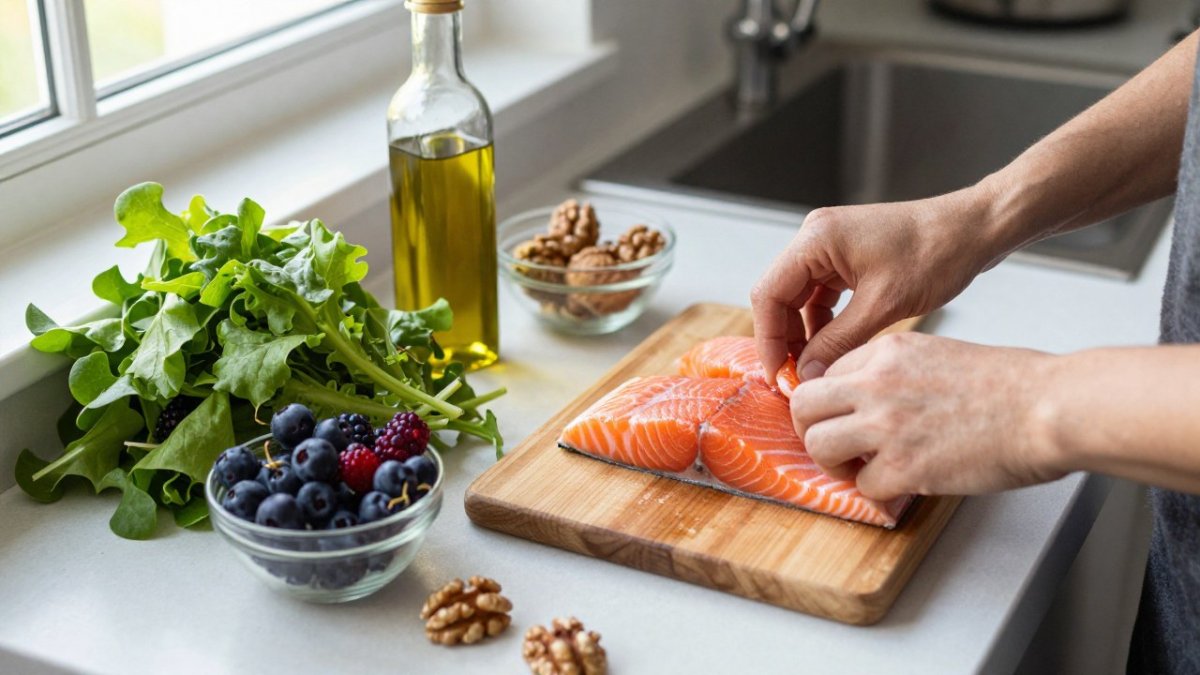
Monounsaturated Fats
Olive oil, avocado, and most nuts are the usual sources. Replacing some saturated fat with these fats is a common recommendation in dietary guidance for fatty liver. Practical portions: a tablespoon of olive oil drizzled on vegetables or used to saute, about one-fifth of a medium avocado on toast, and a small handful of almonds or peanuts as a snack. A common pattern is to use olive oil as the main cooking fat and keep butter and full-fat fried foods for occasional use.
Omega-3 Fatty Acids
Fatty fish such as salmon, sardines, mackerel, and herring supply the long-chain omega-3s that get the most research attention. Walnuts, flaxseed, and chia provide the plant form, which the body converts less efficiently. Practical portions: a palm-sized piece of fish two or three times a week, a tablespoon of ground flaxseed stirred into oatmeal, or a small handful of walnuts. Evidence for fish oil capsules specifically is more mixed than for the foods themselves, so treat the whole food as the default and discuss supplements with a clinician.
Fiber and Whole Grains
Soluble fiber from oats, barley, lentils, and beans is a common part of dietary patterns discussed for fatty liver. Swapping white bread, white rice, and refined cereals for whole-grain versions is one of the simplest changes to make. Practical portions: a half-cup of cooked oats at breakfast, a half-cup of cooked barley or brown rice at dinner, and a slice of whole-grain bread instead of white. Aim for a bowl of beans or lentils several times a week rather than trying to hit a fiber number on day one.
Legumes and Nuts
Beans, lentils, chickpeas, and peanuts are inexpensive sources of fiber and plant protein that fit a liver-friendly pattern. Nuts add monounsaturated fat and small amounts of omega-3s. Practical portions: a half-cup of cooked beans added to a salad or soup, a quarter-cup of hummus with vegetables, and a small handful of unsalted nuts as a snack. Watch out: flavored and heavily salted nut mixes can add a lot of sodium and added sugar, so read the label and choose plain versions when possible.
Fruits and Vegetables
Colorful produce supplies fiber, potassium, and antioxidant compounds. For a concrete list of the best liver-supporting foods to build meals around, see the best foods for liver detoxification. Practical portions: half a plate of vegetables at lunch and dinner, a piece of whole fruit instead of juice, and leafy greens several times a week.
What the Evidence Supports
The strongest evidence is for overall dietary patterns, not for any single food. A pattern built on vegetables, whole grains, legumes, nuts, olive oil, and fish, with limited added sugar and refined carbohydrates, is what most practitioners recommend. Individual nutrients are best treated as parts of that pattern rather than as targets to chase in isolation.
Lean Protein and Choline: What the Evidence Shows
Choline, found in eggs and beef liver, is an essential nutrient. Low dietary choline has been linked to fat buildup in animal and human studies, but the data on whether extra choline reverses fatty liver is limited.
Best Liver Supplements for Fatty Liver: What to Know Before You Buy
Supplements get the most attention and have the weakest evidence. No supplement is a substitute for the dietary pattern described above, and none is a substitute for medical care. The honest way to read the research is to separate nutrients with some clinical support from those with only preliminary or mixed results.
Vitamin E
Vitamin E has been studied in people with non-alcoholic fatty liver disease. Those doses carry risks, including bleeding risk and concerns with long-term use, and they are not right for everyone. Most practitioners reserve vitamin E for selected patients under medical supervision rather than recommending it broadly.
Milk Thistle and Turmeric
Both can interact with medications, and turmeric products vary in how much active compound they contain. Discuss these options with a clinician before use.
Other Nutrients With Preliminary Evidence
Food sources such as eggs, fish, and legumes are a practical default to discuss with a clinician.
Supplement Safety and Medication Interactions
Supplements are not regulated like drugs for purity or potency, so labels may not match contents. Before buying any product, check the label for the exact ingredient amounts, confirm it has third-party testing, and ask your doctor or pharmacist whether it is safe with your prescriptions. Watch out: some herbal products can affect blood thinners, blood sugar medications, and blood pressure drugs, so an interaction check is not optional.
Reading a Product Label
If you are considering a specific product, read its label carefully. Look for the exact ingredient amounts, the suggested use, and any warnings about pregnancy, nursing, use by minors, or medical conditions. Statements on supplement labels have not been evaluated by the Food and Drug Administration, and products are not intended to diagnose, treat, cure, or prevent any disease. A product that lists turmeric, milk thistle, beet root, and artichoke extract is making a formula play, not a proven treatment, and the label warnings matter more than the marketing.
How Progress Is Actually Assessed
Liver fat and disease status are assessed clinically, through blood tests, imaging, and sometimes biopsy. Meaningful measures include liver enzymes, imaging results, and body weight trends over months. At-home claims about "cleansing" or "flushing" liver fat are not supported by medical evidence. Bring any supplement you are considering to your next appointment so your clinician can check it against your labs and medications.
The article's main supplement points, summarised for quick reference.
| Supplement | Key point | Note |
|---|---|---|
| Vitamin E | Studied in fatty liver | Risks, including bleeding; medical supervision |
| Milk thistle and turmeric | Can interact with medications | Check with a clinician first |
| Food sources | Eggs, fish, legumes | Practical default to discuss with a clinician |
| Supplement labels | Not evaluated by the FDA | Check ingredients, testing and interactions |
Foods and Nutrients to Limit or Avoid
Sugar-sweetened drinks, refined carbohydrates, and fried foods are commonly discussed as dietary factors in liver fat. Added sugar, especially fructose from sweetened beverages, is processed heavily by the liver. Limiting saturated fat from fatty processed meats and full-fat fried foods is also commonly recommended. Alcohol should be avoided or minimized.
How to Reduce Fatty Liver in 14 Days: A Realistic Plan
Fourteen days is enough to build habits, not to reverse liver fat. Many clinicians focus on a steady loss of 5 to 10 percent of body weight over several months as a more realistic target.
Day 1 to 3: Remove sugary drinks and set a daily water goal. Day 4 to 7: Add a serving of vegetables to lunch and dinner, and swap refined grains for whole grains. Day 8 to 11: Eat fish or legumes at least twice a week and replace fried snacks with nuts. Day 12 to 14: Review your week, note energy and bloating, and plan the next month.
Track what you eat for the first week so you can see where sugar and refined carbs hide. To put this plan into practice, follow a step-by-step liver-friendly diet guide.
Booking Your Next Step With Your Doctor and a Daily Liver Support Routine
Bring this plan to your next appointment. Ask your doctor about repeat liver testing, blood sugar and cholesterol checks, and whether a supplement fits your situation. Once you have a plan, build a daily routine: a glass of water with breakfast, a vegetable-rich lunch, a walk after dinner, and a supplement only if your clinician agrees. Consistency over several months matters far more than a perfect two weeks.
Frequently Asked Questions
What nutrients help fatty liver?
The nutrients with the most consistent support for fatty liver are omega-3 fatty acids, vitamin E in food form, choline, and fiber, along with a diet built around vegetables, fruit, whole grains, lean protein, and unsaturated fats. Evidence varies in strength. Omega-3s and fiber are commonly discussed in research on liver fat and metabolic markers, while vitamin E has been studied in adults with nonalcoholic steatohepatitis. Food sources are the safest starting point. Talk with your doctor before adding high-dose supplements, especially vitamin E, which can carry risks at high doses.
What helps flush fat from the liver?
Liver fat is commonly discussed as changing with calorie moderation, gradual weight change, and improved blood sugar and triglycerides. Regular physical activity, limiting added sugar and refined carbohydrates, and cutting alcohol are commonly recommended as part of this process.
Can dietary supplements effectively support liver fat reduction?
Supplements can support a healthy routine, but they are not a replacement for diet, weight management, and medical follow-up. Renew Liver Booster is a daily dietary supplement made in the USA with turmeric, milk thistle, beet root, and artichoke extract, and it is labeled as not intended to diagnose, treat, cure, or prevent any disease. Adults should take two capsules daily as directed. Because ingredients can interact with medications, check with a physician or pharmacist before use, especially if you take blood thinners, diabetes medications, or cholesterol drugs.
Are there any nutrients that should be avoided with fatty liver?
Limit added sugar, especially sugar-sweetened beverages and fructose-heavy foods, along with refined carbohydrates, fried foods, and processed meats. Keep saturated fat and trans fat low, and avoid alcohol unless your doctor says otherwise. Read supplement labels carefully. Ask your doctor before taking any high-dose vitamin, including vitamin E, because doses above standard levels can carry risks for some people.
